Table of Contents
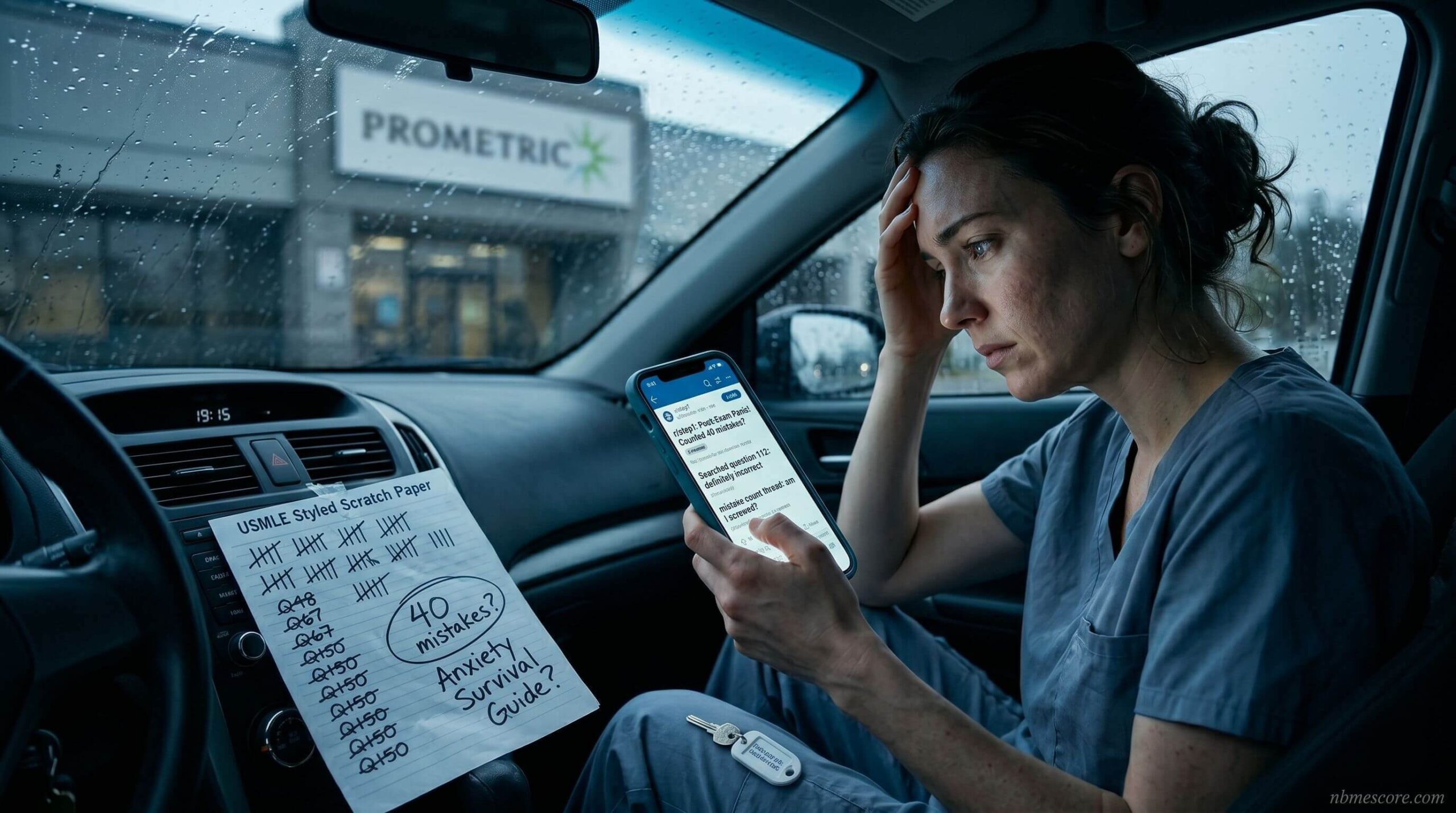
You walked out of the Prometric center, sat in your car, and stared blankly at the steering wheel. Instead of feeling relieved, a wave of sheer panic hits you. You immediately open your phone, go straight to Reddit, and start searching for the questions you flagged. Within an hour, you have already counted mistakes after USMLE Step 1 or Step 2 CK, and you are entirely convinced you failed.
During your dedicated period, you relied on accurate Step 2 CK score predictors to build your confidence. You were hitting safe passing zones. But now? You can vividly remember 20, 30, or even 40 questions you got wrong. If you are currently spiraling into a post-exam depression, take a deep breath. You are experiencing a psychological trap that almost every medical student falls into. Let’s break down exactly why counting your mistakes is completely useless.
The Phenomenon of Recall Bias
The human brain is hardwired to remember trauma and stress. When you sit through an 8 or 9-hour exam, you do not remember the 150 straightforward questions that you answered correctly in 30 seconds. Your brain completely deletes them from your memory.
Instead, your brain aggressively holds onto the 20 obscure, weirdly-worded “WTF” questions that you agonized over. When you go home and realize you guessed wrong on those specific questions, it feels like you failed the entire test. You are experiencing massive recall bias. You are judging a 280 or 318-question exam based on the 5% of questions that traumatized you.
The Magic of Experimental Questions
Here is the biggest secret that the NBME does not advertise loudly enough. A massive chunk of your exam does not even count toward your final score.
🧪 The 80-Question Buffer
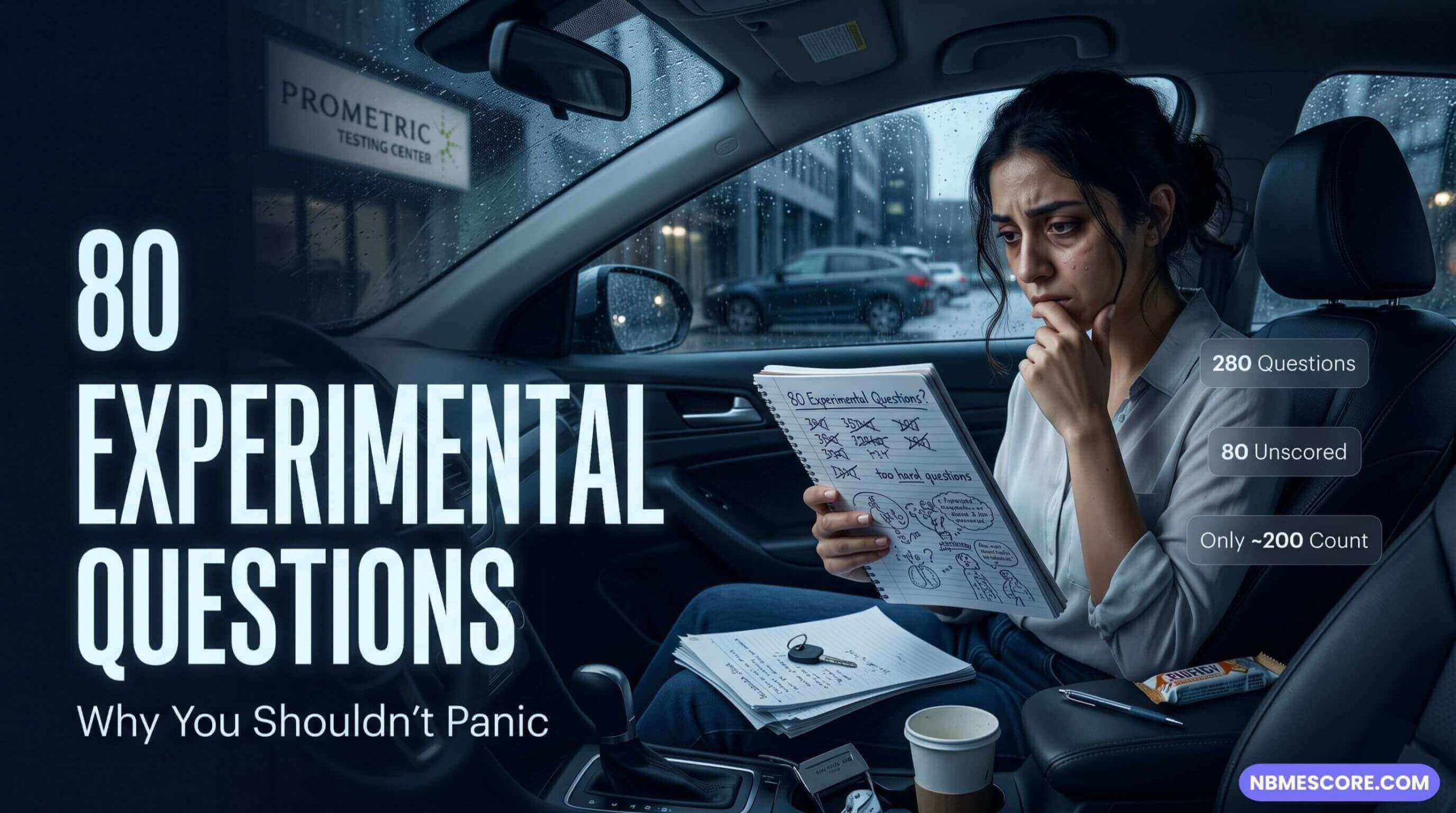
On USMLE Step 1, there are roughly 280 total questions. However, 80 of those questions are purely experimental. They carry zero weight. The NBME is simply testing them out for future exams. On Step 2 CK, out of the ~318 questions, a similar proportion is unscored. Those bizarre, impossible questions you keep crying over? There is a massive statistical probability that they were experimental and won’t hurt your score at all.
The Math of the Curve
Just like the harsh curves you saw on NBME 25 or the forgiving curves on later forms, the real USMLE has a pre-determined, equated curve. The passing threshold for Step 1 is roughly a 196. To achieve this, you generally only need to get around 60% of the scored questions correct.
Think about that math. Out of the 200 scored questions, you can comfortably get around 80 questions completely wrong and still walk away with a “PASS” on your transcript. Even if you counted 40 mistakes in your car, you are nowhere near the danger zone. For Step 2 CK, the curve is similarly designed to reward your overall clinical reasoning, even if you bomb a few isolated minutiae questions.
How to Survive the Wait
The 2 to 3 weeks between taking your exam and getting your score report are famously agonizing. Here is the best advice you will ever receive:
-
1. Delete Reddit Immediately
Reading threads of other panicked students will only fuel your anxiety. Misery loves company, but it won’t change your score. -
2. Stop Googling Symptoms
Looking up the mechanism of action for a drug you were tested on 5 hours ago is a form of self-torture. Let it go. -
3. Trust Your Practice Scores
If your final NBME and Free 120 scores were in the safe passing zone, statistically, you passed. Trust the data, not your post-exam feelings.
Frequently Asked Questions (FAQs)
Q: Is it normal to feel like I completely failed the USMLE?
A: Yes. It is actually more concerning if you walk out feeling like the exam was incredibly easy. The test is specifically designed to push you to your breaking point. 90% of students who pass report feeling like they failed immediately after walking out of the center.
Q: I counted 30 mistakes for sure. Did I fail Step 1?
A: Almost certainly not. Assuming a portion of those 30 mistakes were experimental, and remembering that you can miss roughly 80 scored questions and still pass, counting 30 mistakes actually puts you in a very comfortable passing bracket.
Q: Do the experimental questions look different?
A: No. The NBME writers intentionally blend experimental questions so you cannot tell them apart. Usually, if a question feels incredibly bizarre, poorly worded, or tests a disease you have literally never heard of in First Aid, it is likely an experimental question.